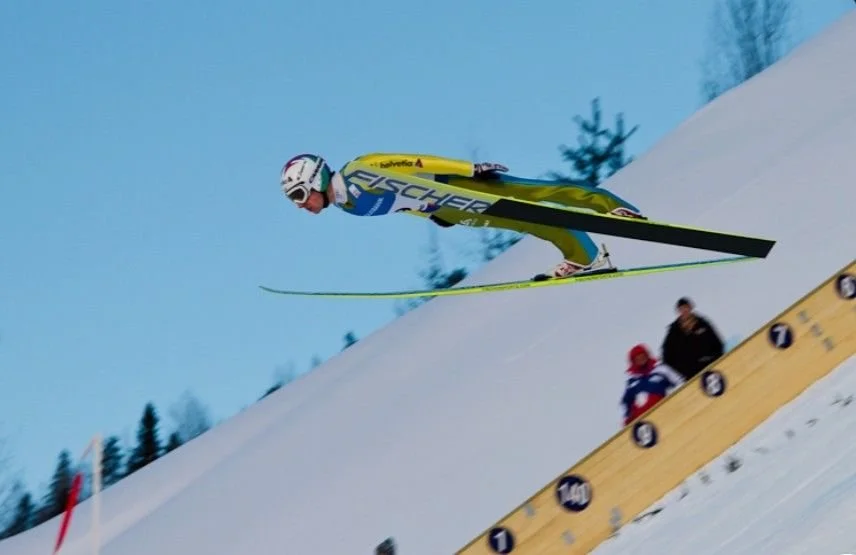

Ski jumping is a superhuman although exhilarating albeit quite spellbinding with the aspect of winter sporting about and is actually one of the most visual sport in the world across every continent. A perfect dish of speed, balance, timing, courage — and physics. With athletes catching air off a 30-foot ramp and hanging well in the wind before landing cleanly on snow.
You would think the sport of ski jumping is flying, but it actually is a science with many years of training to make it look correct.
What Is Ski Jumping?
Ski jumping is a winter sport in which athletes make timed descents on a specially made ramp (inrun), launch themselves off the end, and fly as far as possible through the air before safely landing on snow-covered ground.
Their problem is not merely how far, but also style, balance and the art of landing. Tip: Judges assess the distance and hauteur of jumpers.
How Ski Jumping Works
There are four stages in ski jumping, which we will describe below.
Inrun (Speed Phase)
This means the athlete begins at the ramp’s peak with his/her body low to decrease air drag. This aids them in generating fast speed prior to taking off.
Takeoff
The jumper launches off the end of the ramp at exactly the right moment. That moment is very crucial because any mistake can bring closer distance.
Flight Phase
In flight there is the so-called V-style skiing position. Its skis are flared in a “V” formation, its weight pitched forward to create lift and stability.
Landing
Jumper is on slam down a slope Making use of the telemark landing shape with one foot in advance of the alternative to feel greater balanced.
Ski Jumpers: Why Do They Stay Up?
Ski creating relies on aerodynamics and physics. To a large extent the secrets to getting athletes to spend more time in midair are:
| Factor | How It Helps |
|---|---|
| High Speed | Builds momentum before takeoff |
| V-Style Position | Increases lift like airplane wings |
| Wind Conditions | Headwind increases flight time |
| Body Control | Reduces air resistance |
| Ski Design | Long skis provides more lift |
The skis are almost wings: Air pushes up underneath, against the body.
Equipment Used in Ski Jumping
Ski Jumpers EquipmentThe equipment that ski jumpers use is specifically designed to make the sport better and safer:
- Skis that are longer, wider – for more lift
- Lightweight aerodynamic suits
- Flexible ski bindings
- Helmet and goggles for protection
- Special boots for better management and stability
Ski Jumping Equipment Overview
| Equipment | Purpose |
|---|---|
| Longer, wider skis | More lift |
| Lightweight aerodynamic suits | Improves aerodynamics |
| Flexible ski bindings | Better movement |
| Helmet and goggles | Protection |
| Special boots | Better management and stability |
Jump distance is extremely sensitive to small changes in devices.
Training for Ski Jumping
It takes years in preparing for ski jumping. The athletes only concentrate on strength, balance, timing and mental control.
Balance Training
Balance Boards and Stability Exercises used by Athletes for control in flight.
Strength Training
Powerful takeoff energy comes from strong legs and core muscles.
Takeoff Practice
The specific instant of the push-off from the ramp is trained repeatedly by jumpers.
Aerodynamic Position Training
They train to hold the V-style position that provides maximum lift & minimum drag.
Mental Training
Skiing ability aside, the sport of ski jump is all mental. Visualization techniques are often incorporated into jumps by athletes.
Physical Demands of Ski Jumping
| Skill | Importance |
|---|---|
| Leg Power | Essential for takeoff strength |
| Core Stability | Maintains balance in air |
| Flexibility | Reduces injury risk |
| Focus | Helps with timing and control |
Types of Ski Jumping Hills
Ski jumping — Ski jumping competitors compete on a hill of varying sizes.
| Hill Type | Distance Range |
|---|---|
| Normal Hill | Short to medium jumps |
| Large Hill | Longer jumps |
| Ski Flying Hill | Extremely long jumps (200m+) |
Scoring System
Athletes are judged based on:
- Jump distance
- Style points from judges
- Wind compensation
- Gate compensation
The final score factors all of these into the equation.
Safety in Ski Jumping
Ski Jumping is heavily regulated even though it looks as dangerous as it comes.
Safety measures include:
- Controlled ramp design
- Protective gear
- Wind monitoring systems
- Strict training standards
Safety Features Overview
| Safety Measure | Purpose |
|---|---|
| Controlled ramp design | Improves athlete safety |
| Protective gear | Reduces injury risk |
| Wind monitoring systems | Ensures safe jumping conditions |
| Strict training standards | Promotes safe performance |
Final Thoughts
One of the peculiarities of ski jumping is that it is a sport combining science with skill and courage. Mastering speed, flight, and landing are processes that athletes spend years training their technique on. It is not only about jumping far–but using the body in air precisely.
Ski jumping may not be a sport for everyone but if you at least understand the rules and mechanics — you’ll certainly grow interested.


